Long-term change, measured and meaningful
At Trails Youth Initiatives, impact is the result of consistent relationships, time, and trust. We work with youth over multiple years, beginning at age 12, and continue supporting them into adulthood through our For Life Initiatives.
Because our programs are long-term, our approach to impact is both quantitative and qualitative: we measure outcomes, track participation, and just as importantly, listen closely to the young people we serve.
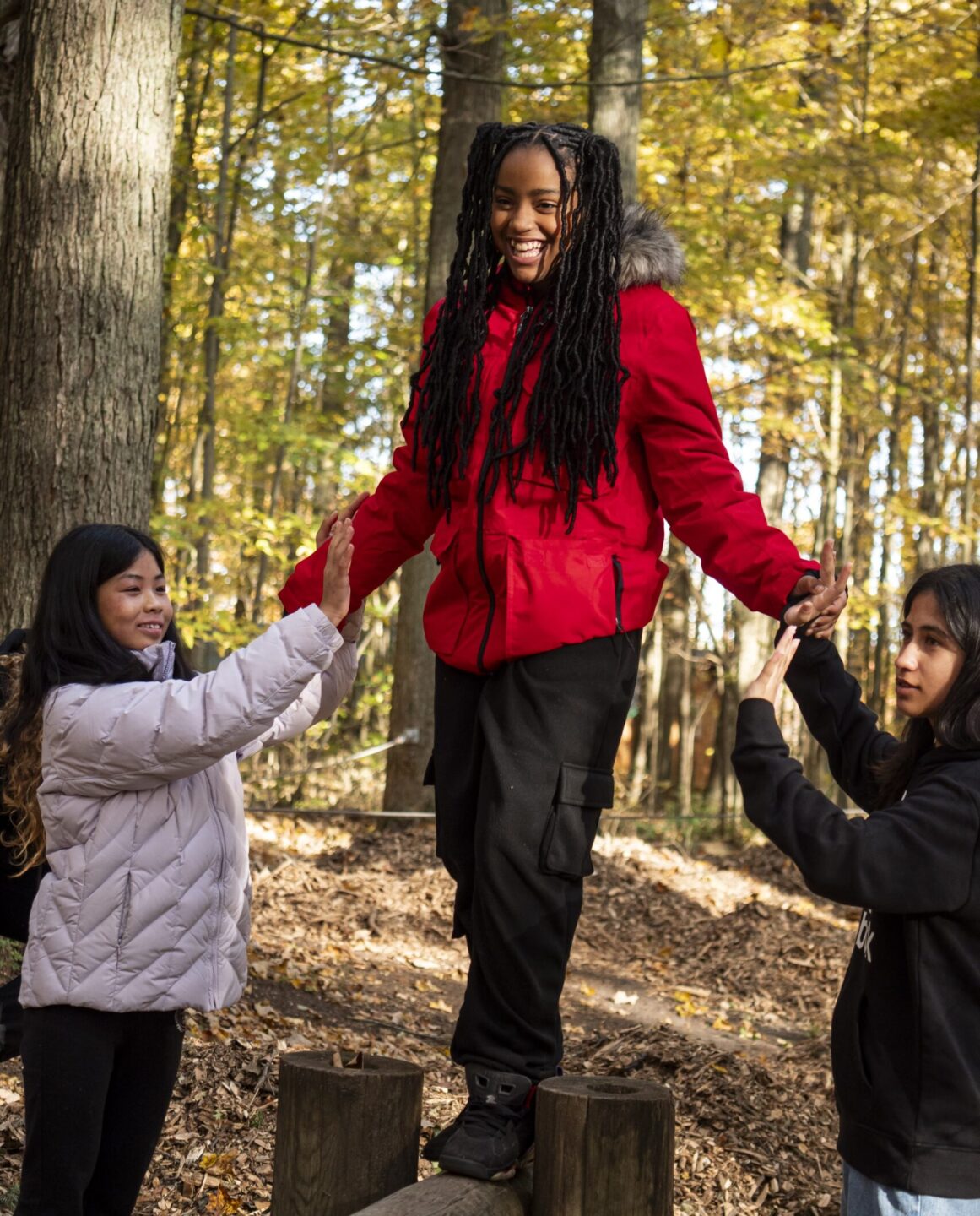
The Challenge
Youth from at-risk Toronto communities face overlapping barriers including poverty, racism, and family instability that intensify during early adolescence. Without consistent support during this window, many disengage from school, experience declining mental health, and face reduced prospects as adults. Short-term programs rarely interrupt these patterns. Trails exists to change that.
What We Do
Trails delivers Four Seasons, Four Years, a Ministry of Education–approved mentorship and outdoor education program spanning four full years. Youth attend summer and monthly weekend sessions with the same cohort and staff throughout. After graduating, alumni access ongoing support through For Life Initiatives: scholarships, mentorship, and career resources.
Our Reach & Outputs
What this looks like in practice
Each year, Trails delivers programming and support across both youth and alumni initiatives.
Four Seasons, Four Years
2026-2027
- 168 youth enrolled across 9 cohorts
- 179 total program days delivered
- 520 hours of outdoor education and life-skills programming per youth
For Life Initiatives
2025
- 74 alumni supported through scholarships
- 325 alumni engaged through the Alumni Association, AIM Program and FORward Resources, including 70 event attendees, 73 mentorship recipients, and over 40 alumni volunteers
- 40 Facilitator positions were filled by Alumni
We track outputs annually and compare year over year to ensure program consistency, quality, and growth.
Outcomes That Matter
Supporting youth toward long-term success
Trails measures outcomes related to education, confidence, connection, and long-term stability. These outcomes reflect both immediate progress during the program and sustained success beyond graduation.
Listening, Learning, and Improving
Youth voice shapes our programs
Trails measures outcomes related to education, confidence, connection, and long-term stability. These outcomes reflect both immediate progress during the program and sustained success beyond graduation.
Listening, Learning, and Improving
Youth voice shapes our programs
Trails believes that young people are experts in their own experience. Program quality and relevance depend on listening and acting.
To support this, Trails uses multiple feedback and learning tools:
- Participants complete surveys twice per year reflecting on growth across priority areas
- Quarterly one-on-one Key Kid Check-ins provide space for direct feedback
- End-of-session community meetings invite youth to share concerns and propose solutions
This feedback directly informs program design, curriculum updates, and facility improvements.
Examples of youth-led change
- Youth collaboration in the design of the Trails Lodge (1998) and Hilltop Cabin (2017)
- The creation of the Facilitator-in-Training (FIT) program following alumni feedback (2016)
- New overnight and winter camping initiatives requested by participants (2018)
- The introduction of nighttime skating after youth-led research and advocacy (2019)
- Increased youth leadership in program planning for senior participants (2020)
- Shifting alumni mentorship in Grades 11 and 12 to group mentorship through the AIM program (2022)
These changes reflect Trails’ commitment to continuous learning and shared ownership.